The story is enough.

The story is enough.
Showing posts with label memoir. Show all posts

Wednesday, September 28, 2016

H Is for Hawk by Helen Macdonald


This review can also be seen in the Canon City Daily Record


I am not a bird person. Never have been, and the day a parrot bit me, I knew I never would be. I avoid aviaries and I ignore chickadees and robins at bird-feeders. Yet, we have chickens. I am able to enjoy them - somewhat - if at a respectable distance.

One evening, I looked into my backyard and saw our new, young rooster moving oddly at the door to the chicken house. He was out in the yard, back into the coop, and then back out the door again. What was he doing?! And then my eyes fell on a hawk, sitting on a fence post at the edge of our property - utterly still. The rooster finally stopped moving in and out, deeming the yard safe. When the hawk suddenly changed his position, the chicken ran back into the hen house. After a few moments of complete stillness from the bird of prey, the domestic bird felt safe to try his luck outside. And once again, the hawk changed his position, just slightly, like a game of Red Light, Green Light... taunting the poor rooster!

Amused, I saw the hawk had a sense of humor, a sense of fun about his business. So I was only mildly shocked at myself when I picked up "H Is for Hawk" by Helen Macdonald. One of the Ten Best Books from the 2015 New York Times Book Review, I had heard delighted praise for this work - part grief memoir, part literary exploration, part natural poetry. Surprised, but pleased, I was hooked from the first page, and I found myself enjoying yet another bird. This one was named Mabel.

With beautiful sentences, and delicious phrases Macdonald introduces us to her love for goshawks, a raptor related to eagles and buzzards. She observes, "Looking for goshawks is like looking for grace: it comes, but not often and you don't get to say when or how." Amidst the tale of her purchase, training, and flying of the hawk, we are invited to travel through the bereavement that grips her upon the untimely death of her father. And woven with these tender intimacies, Macdonald shares with us the private despairs of fellow falconer, T.S. White, author of "The Once and Future King." She divulges how the stories he composed of King Arthur, Merlin, and Camelot mirrored his own griefs, and how he found a dichotomy of struggle and relief in goshawking, just as she does.

This textured narrative insists that while the heart breaks and seeks flight, healing is only found in the human world. And I found, here, another bird to admire.

Photo credit: 


Saturday, July 30, 2016

Under the Stars: How America Fell in Love with Camping by Dan White


This review can also be found in the Canon City Daily Record.

July and August are peak camping months in Colorado's mountains what a perfect opportunity to dive into the history of camping. Now, don't panic! I said history, but I didn't mean dry, humorless and impersonal. Far from it! Dan White considers himself a "history minded camping fanatic." He's already written a book about hiking the Pacific Crest Trail. But now, this enthusiastic writer has provided audiences with another work: "Under the Stars: How America Fell in Love with Camping," an "irreverent history of American camping," in which White attempts to imitate each epoch of camping himself. While amusing and personable - unexpected and fascinating - it is also well-researched and documented.


Without being sentimental or whimsical, Dan White explores the movement from necessary outdoor sleeping and traveling to recreation and planned vacations. Beginning with Thoreau and the idea of man "finding himself" in the woods, we are invited to journey through the Golden Age of camping (1880s - 1930s) to the beginnings of the Boy Scouts of America. Then we visit women and their role in camping and participate in the creation of national parks. Finally, he takes us into more recent times with car camping, the Wilderness Act, "Leave No Trace," glamping and RV/trailer camping.

"Under the Stars" is historically accurate, with beautiful descriptions of flora and fauna. But what sells this book is the personal narrative, allowing history to become a lively backdrop. Dan White writes with a humble, self-deprecating, and conversational wit. He strives to make each of his singular forays into the past precise. Though quite experienced in camping and backpacking, the author does not pretend to be an expert. Instead, we absorb his passion for camping in all of its forms - past and present - in its best and worst facets. Sparing no details, he writes about the beauties and the foibles that come from an activity that was not meant to be fun in the first place. We are educated and entertained.

Dan White travels across the United States to discover what American camping really is and why we are drawn to this sport. His adventures are varied and fascinating - he camps in the nude in known cougar territory, tags along on an inner-city girls-only trip into the Everglades, carries waste out of the woods in a device he invented, and rents his very first RV to find out what all the excitement is about.

With his joyful daughter, and sometimes reluctant wife at his side, White encourages us to camp, to think about what camping means to us as Americans, and to consider all aspects of law and science in our native wilderness.

Photo Credit: https://images-na.ssl-images-amazon.com/images/I/518mX7lovGL._SX329_BO1,204,203,200_.jpg

I received this book in exchange for a fair and honest review.

Monday, June 27, 2016

Beautiful Boy: A Father's Journey through His Son's Addiction by David Sheff


This review can also be found at the Canon City Daily Record.


Yard sale season is in full swing and you can find numerous treasures and delights. Tupperware canisters just like your grandmother had, the exact right size light fixture for the bathroom, and the perfect pitchfork for - well, you know... But there are also books - lots of books.

"Beautiful Boy: A Father's Journey through His Son's Addiction" is one I found this summer. Published in 2008, David Sheff's book became an instant bestseller and Entertainment Weekly's Best Nonfiction Book of the Year. It is the raw and vulnerable memoir of a father's unconditional love, receiving high praise from Anne Lammott and Mary Pipher.

What causes a child to try drugs? Divorce? Remarriage? Illness? Parents' experimentation in their youth? Finances? Opportunity?

What causes a child to become addicted to drugs? To steal, lie, and hide? Who does your child become when they are addicted to meth? Can they ever escape? And what does a parent do when "everything in their power" doesn't seem enough?

David Sheff opens his heartbreak to us - sharing with humility and candor the long road of loving a child in, and through, his addiction. He tells us with intimate detail his own private experience, welcoming us into his home, family, and his own sense of frailty and inadequacy. Sheff writes about his son's light and humor and brilliance before meth commandeered him. Weaving through this tale are threads of the red flags - hot spots - he wished he had attended to earlier, especially since they might have led to his son's decision to experiment and, ultimately, fall victim to addiction. Sheff examines his own past drug experimentation, his divorce from Nic's mother, and the science behind addiction and recovery.

Sheff's love for his oldest, his desire to rescue him from desperation, and his analytical mind seek for answers while also searching for healing. How to help his son becomes an obsession that does not allow him to rest or relax for years at a time. Al-Anon, therapy, and addressing codependency are all helps, leaving him with the feeling that, though this excruciating pain is hard to describe and convey, it needs to be shared. There is comfort in sharing and in hearing the stories of others who have walked the same road. There are tears, yet there are also smiles and answered prayers.

I was surprised by the depth and sheer humanity of this riveting memoir. I could not put it down...

Out there, this summer, is a book in a yard sale box or on a book sale table waiting for you to come and be pleasantly surprised as well.

Photo Credit:  https://images-na.ssl-images-amazon.com/images/I/418ZByk-NEL._SX326_BO1,204,203,200_.jpg

Wednesday, June 1, 2016

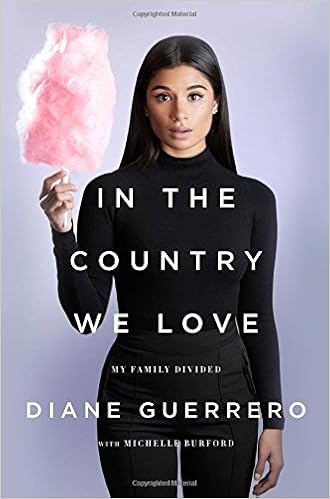
In the Country We Love: My Family Divided by Diane Guerrero


"Orange Is the New Black" actress, Diane Guerrero, has written a memoir.  She circles us into her intimate group and tells us, quietly - without shame, about her heartache and loss, growing up In the Country We Love as the child of illegal immigrants.  At the tender age of 14, she comes home to find her parents are deported.  Young Diane is left alone to finish her high school career and create a new life - as an orphan.

This is an intriguing tale about a small-time girl who hits it big.  It is also the story of abandonment and loneliness.  It is a piece about immigration and children's rights - but do not fear!  The call to action is saved until the end.  And this way of organizing affords Ms. Guerrero the opportunity to share her experience, to reach out and connect with us, to allow our hearts to break with hers - to make people listen and care... to let others in a similar situation know that they are not alone.

The tone of the book is conversational, and though it deals with some heavy ideas and emotions, it is highly accessible.  There were times when I could feel a discrepancy in voices (the ghostwriter on this book is the talented Michelle Burford), but the story was absorbing and I could ignore it.  

A quick read, and a thought-provoking story - I recommend this to be on a summer book list.

Photo credit: https://images-na.ssl-images-amazon.com/images/I/41di5xVtktL._SX328_BO1,204,203,200_.jpg

I received this book in exchange for a fair and honest review.

Monday, April 25, 2016

If At Birth You Don't Succeed by Zach Anner


This review can also be seen in the Canon City Daily Record.


"If at birth you don't succeed," try, try anyway. That's Zach Anner's adage. Well, that and "You go to Olive Garden to live life." 

Our "greatest failures can be catalysts for triumph." Here, in this hilarious and charming memoir, we are convinced from the introduction that one can find purpose and humor in every misstep. We endure the falling down because we know what awaits when we finally pick ourselves back up.

Zach Anner says his first failure was birth - he arrived early and outfitted with cerebral palsy. Cerebral palsy is a neurological condition that affects body movement, coordination and balance, and just happens to be "the sexiest of the palsies." So while he flails at random, cannot convince his eyes to track a line in a book, needs to be in a wheelchair, and his words don't always have dulcet tones, he is not to be stopped. Zach made films at the University of Texas long before he became a YouTube sensation, and won a reality TV show competition on Oprah's network. He has created countless comedy routines, an exercise series, a travel show, and programming investigating religions of the world. He has grown from his ten year old infatuation with Cindy Crawford, to speed dating, and on to falling in love. The little boy moved from adaptive PE classes to writing his own music as an adult. "If At Birth You Don't Succeed" is the "unlikely - though not unlucky - story" of a child growing up - and all of the uncomfortable faux pas and bloopers along the way.

Comedy is universal, and with this book, nothing is off-limits. While Zach accepts the realities of his life, he also shares intimate details with familiarity and connection. In a wheelchair or not, we can laugh with recognition. We've all experienced shame, fear, and nervousness. We've all had to move beyond immaturity, and take a stand. While reading, you often just shake your head, taking a moment to chuckle at the ridiculousness inherent in being human.

At moments gentle and quiet, this memoir is also irreverent and fierce. Humble and modest, yet infectious and laugh-out-loud, Zach's humor is not just for humor's sake. It has a driving purpose - to encourage us all to laugh at our own inadequacies. We become his friend, and he, ours throughout these pages. Zach's honest observations about human response in various situations is astute, quite instinctual actually, and his timing for delivery of each joke is spot on. He often reminds us that "sometimes the only difference between mistakes and miracles is what you choose to call them."

Photo credit:  http://ecx.images-amazon.com/images/I/51ZGlEesnDL._SX329_BO1,204,203,200_.jpg

I received this book in exchange for a fair and honest review.

Thursday, April 7, 2016

Post Hole Digger by James Pope


I am a sucker for a farm-boy story.  In fact, my favorite Laura Ingalls Wilder book is Farmer Boy.  Something about the tale of a boy growing up the hard way, facing hard facts, and doing hard work is intriguing to this softie of a girl.

Post Hole Digger arrived, signed by the author, looking crisp and fun.  Then I read the blurb on the back.  "This is the true story of one Iowa farm boy and how he was called upon to fulfill responsibilities for things years beyond his age." Okay.  Could use some tightening up.  Moving on.  "These responsibilities are taking place every day on farms across the United States,  and being called upon at an early age, childhood has pass them by." A lot more problems with that sentence.  And then it closed with "The children do not have the luxury of playful activities as they must shoulder the responsibility of fulfilling their family needs."  This is the blurb that is supposed to excite and entince me to read this memoir?

I struggled with the content inside the covers, as well.  The final sentence of the book is not only abrupt, but seems to be missing words.  It is then followed by a list.  It's awkward and unprofessional.

Post Hole Digger is a memoir - written in third person, using past tense, then randomly shifting into a passive voice.  Dialogue is akin to watching "Father Knows Best" or "Leave it to Beaver".  While the adventures and efforts of young Jim on the farm are intriguing, and many are important to share, the telling of them in this manner is frustrating.  The rough and awkward narrative suddenly becomes a Harlequin romance when Jim "becomes a man".  Consistency in voice and tone is hard to find here.

With some professional editing, this book has promise.  Maybe not as a great piece of literary work, but as a respectable, and readable, memoir about an Iowa farm boy.  

Photo credit: http://ecx.images-amazon.com/images/I/5129hddwkPL._SX331_BO1,204,203,200_.jpg

I received this book in exchange for a fair and honest review.

Thursday, July 2, 2015

Wild: From Lost to Found on the Pacific Crest Trail by Cheryl Strayed


A memoir bridges the gap between people, finding connection in the ways we are different yet still the same. Wild, the incredibly vulnerable story of a young woman's hike on the Pacific Crest Trail, is such a bridge. We have all had a burden that was too heavy to bear, found ourselves lost in a wilderness of grief, and come out the other side with a measure of healing.

This tale begins with a hiking boot, tragically lost, close to the end of a long and intense journey. A slow-motion boot tumbling from the top of a ledge - down, down, down until it cannot possibly be retrieved. Despair is evident and we find ourselves wondering with true curiosity and concern - what will she do? What would I do? Left to ponder this, we are taken to the beginning of this story. Back to the time a young woman decided to hike through California and Oregon, alone.

When Cheryl Strayed was in her mid-20s, her youthful mother lost a battle to cancer, swift and vicious. A life that had once had some semblance of order and understanding began to unravel. She was no longer able to hold her siblings together as a family or even stay in her own unseasoned marriage. Raw and bitter pain surfaced and played out in adultery, drugs and reckless behavior. A divorce, an abortion, and an impulsive choice to hike the newly completed Pacific Crest Trail tumbled together in a collection of decisive moments.

On the trail, Cheryl is weighed down by an immense sorrow and a 70 pound backpack nicknamed "Monster." She carries other things at the outset of her trek, quite soon leaving them behind: binoculars, foldable saw, worn-out memories, former perspectives, sections of beloved books, burned at their completion to lighten the burdensome load. She describes herself as "the woman with the hole in her heart." That hole, emptiness itself, is the most cumbersome of all.

The history of the trail is woven in a beautiful tapestry of Cheryl's tumultuous past, frayed and ragged present, and hopes for a simple and unadorned peace. The details that stitch this tale together are specific, honest, and raw. Dauntless, candidness is what connects reader and writer. Cheryl develops a narrative that reminds us that "fear, to a great extent, is the story we tell ourselves."

The pilgrimage beyond grief, to our truest selves, is borne of wanting. "The wanting was the wilderness and I had to find my own way out of the woods." Cheryl finished her 1,100 mile-long hike at the Bridge of the Gods in Oregon. Along the way, there were gifts from others: peaches, T-shirts, showers, rides, and escapes from imminent danger, but the gift she gave herself was the adventure, the discovery of the woman her mother had raised her to be, "from lost to found."

Her gift to us?

It is this memoir.

This article was originally published in The Canon City Daily Record.

Photo Credit: http://ecx.images-amazon.com/images/I/51IyLG-dL5L._SY344_BO1,204,203,200_.jpg 

Tuesday, May 5, 2015

"Truth And Beauty" by Ann Patchett


Truth and Beauty: A Friendship is the bestselling memoir of the friendship between the author, Ann Patchett, and Lucy Grealy (The Autobiography of a Face).  It is borne from Ann's grief upon Lucy's death following almost twenty years as dear compadres.

This is a tale of truth - the cruel honesty stemming from a relationship that rivals the intense closeness of marriage or motherhood.  Ann shares with us the intimate details of the life of a creative genius, a butterfly, that refused to be pinned down.  With courage, she tells us who Lucy really is, what she struggled with, and the effects upon those that loved Lucy.

The book is interspersed with Lucy's own writings, letters to Ann from wherever she happened to be.  They were written during times of sadness, uncertainty, pure poetry.  Paired with Ann's remembrances, they create a complete picture of two women who loved writing and each other.

Lucy is a desperate poet - talented but full of suffering that words cannot ease.  She endured 39 surgeries over twenty years to try and bring her face to a semblance of "normal".  Through this book, we find her sadness and despair, her vibrant sexuality and utter loneliness, her openness and unanswered desires.  

But this story isn't about Lucy.  It is about the earthquakes and typhoons Lucy brought to Ann's life. It is about the eyes of the storm and Ann's measured, practical responses.  It is about an enmeshment so deep that neither could live without the other.

I read an article written by Ann addressing the concerns Clemson University students/parents had about topics addressed in the book.  Some thought the book was explicit in nature concerning drugs, sexuality, and even anti-religious themes.  Ann's response was beautiful.  She suggested that if these were real concerns, then maybe books such as The Great Gatsby, Anna Karenina, Lolita, One Hundred Years of Solitude, and works by Morrison, Updike, Hemingway and Faulkner should no longer be on a syllabus as well.

This book is indeed "explicit".  It "fully and clearly expresse[s] or demonstrate[s]" the truth and beauty in the lives of these two women due to their willingness to be humble and vulnerable with each other.  To be friends.